News Categories: Agriculture, Livestock and Cooperative Development

19 May
By: Remmy Butia 1

FROM SHAMBAS TO SCREENS; INSIDE NANDI’S GIS–KIAMIS SMART FARMING LEAP

In the green highlands of Nandi, a quiet data revolution is taking shape one that could make every hectare, herd and horticulture plot count more in the county’s balance sheet. By integrating GIS land mapping with the national KIAMIS platform, Nandi aims to turn scattered registers into a smart engine for revenue generation across crops, livestock, and horticulture value chains.

A recent technical consultative meeting between the Nandi County Agriculture Department and FAO technical team placed one idea at the centre of reform: data must become a working asset, not a forgotten archive. Officials and experts reviewed how agricultural information is captured, stored, secured and used, and agreed that systems must be integrated and georeferenced if they are to drive real decisions on the ground.

Dr. Kiplimo Lagat emphasized that GIS-linked KIAMIS should go beyond farmer registration to become a living agricultural intelligence platform for Nandi County. He noted that the system must provide dynamic, regularly updated data to support daily policy, planning and field-level decisions across farms, value chains, markets, extension services, disease surveillance and climate risks. He further stressed that KIAMIS must be interoperable with county GIS, livestock, cooperative, market, weather and extension systems, while remaining simple enough for ordinary farmers and last-mile extension officers to use in making practical decisions on production, inputs, aggregation, market access and productivity improvement..

Mr. Micheal Kigathi from FAO states that integrating GIS capability into departmental data systems for planning, targeting and analysis, starting with pilot linkages for mapped programmes by September. This means that land parcels, farms, grazing blocks and irrigation schemes can be visualized alongside production and value-chain indicators on interactive dashboards.

Dr. Paul Sanga, informed members that once KIAMIS data is georeferenced, county planners will be able to quickly identify underserved areas in extension services, disease hotspots, and zones where specific crops or enterprises are concentrated. That spatial view will allow the county to target investment in roads, market sheds, aggregation centres, and water points where they can unlock the greatest economic return per shilling invested.

The meeting further recognized that existing crop datasets remain incomplete and often lie idle after initial registration. To address this, a rapid mapping of data gaps across agriculture, livestock, and related value chains has been agreed upon, with the goal of defining a minimum departmental dataset and updating collection tools. For crops, this means capturing not just farmer names, but also farm sizes, locations, cropping patterns, and yields in formats that feed directly into KIAMIS dashboards

Dr. Muchelule Yusuf from FAO reminded members that with stronger, mapped data, the department can identify high-potential crop zones and tailor input support, mechanisation services and storage investments accordingly. Weekly digital submission of field data, combined with prototype dashboards targeted for completion by August, will allow managers to track which crop programmes are driving revenue growth and which require strategic adjustment. Over time, this precision planning could help farmers shift toward more profitable crops and gain access to better markets.

County Director of Veterinary Services Dr. Daniel Chepkwony stated that Livestock data is central to Nandi’s smart farming ambitions, particularly in animal health surveillance and value-chain development. The meeting singled out training needs on tools such as the Kenya Animal Bio-Surveillance System (KABS), as well as data management and analytical skills for veterinary and livestock staff

Mr. Victor Micheni stated that integrating livestock records into a GIS-linked KIAMIS environment will allow the county to map disease hotspots, track vaccination coverage, and align surveillance routes with real animal movement patterns. This would strengthen outbreak prevention, reduce livestock losses, and protect pastoral and mixed-farming incomes. At the same time, better data on herd sizes and locations improves the county’s ability to attract investment in milk collection, meat processing, and feed supply chains.

Beyond cereals and dairy, the meeting highlighted several emerging value chains that could benefit from smarter data and mapping systems, including apiculture, organic manure, aquaculture, mushroom production, and other enterprises. These sectors were identified as quick wins for income diversification if properly documented and integrated into county data systems

CO for Agriculture and Cooperative development informed members that Action points call for better capture of apiculture and organic manure within value-chain systems, and for their inclusion in extension content, dashboards and programme tracking. When such enterprises are geocoded, showing where bee-keepers, mushroom growers or fish farmers are located, Nandi can design targeted support packages, cluster producers for marketing, and build niche brands that bring premium prices to local farmers.

Dr. Muchelule from FAO underscored the need for a secure, county-owned departmental data management framework with clear user roles, access and editing controls aligned to Nandi’s Data Protection Impact Assessment (DPIA) and internal approval processes.

Mr. Bowen County Monitoring and Evaluation Officer assured members that the department will apply DPIA screening to new digital systems, dashboards and partner platforms to ensure safe, compliant handling of agricultural data. Weekly digital reporting, regular management coordination meetings and an implementation tracker are expected to keep reforms on course and ensure that maps and dashboards actually influence policy and budgets.

Technical ambition must be matched by human capacity, and Nandi has acknowledged this head-on. Targeted capacity building is planned for veterinary, agriculture, ICT and analytical staff, covering topics from surveillance tools and data quality to dashboard use and digital reporting.

The Chair, Dr. Paul also encouraged members that Benchmarking visits to data-advanced counties such as Kiambu, Kirinyaga and Homa Bay are also on the agenda, allowing Nandi teams to learn directly from peers who have already piloted value-chain dashboards and integrated systems. If the county can turn these lessons into a functioning, GIS-enabled KIAMIS ecosystem, Nandi’s famed green hills may soon be known not just for tea and milk, but for how smart data quietly powers the prosperity behind them.

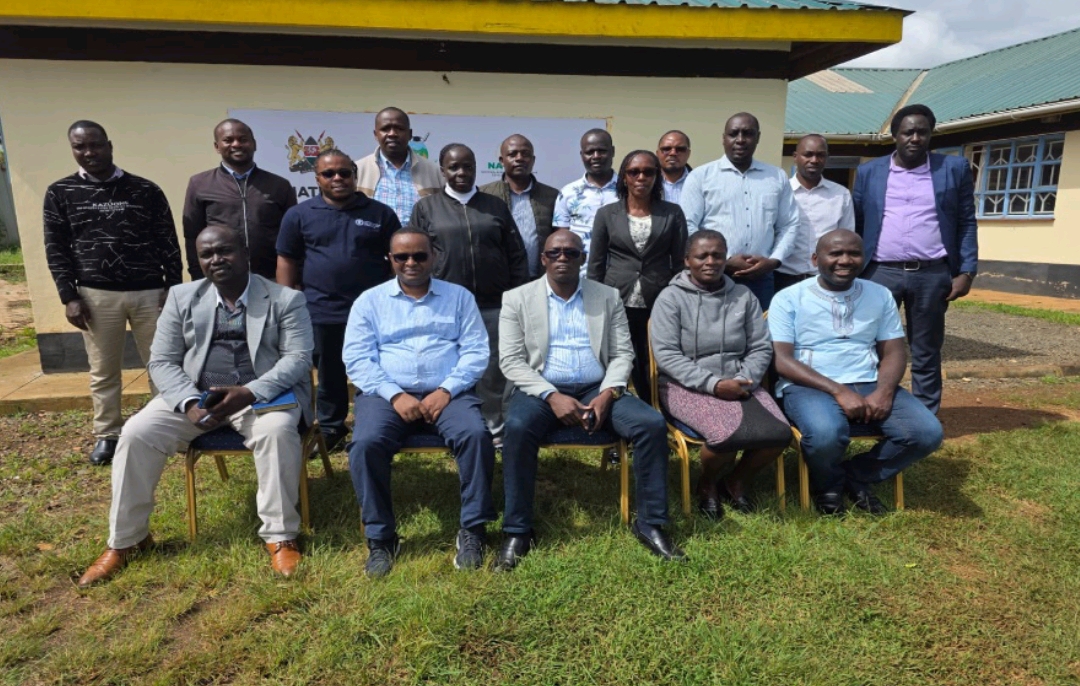
Mr. Micheal Kigathi from FAO hands over Nandi-FAO team discussion report to CO Agriculture Dr. Paul Sanga
Read More
08 May
By: Remmy Butia 2

NANDI COFFEE UNION INSTALLS WEIGHBRIDGE TO BOOST EFFICIENCY AND FARMER EMPOWERMENT

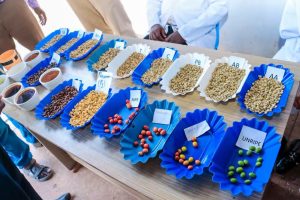
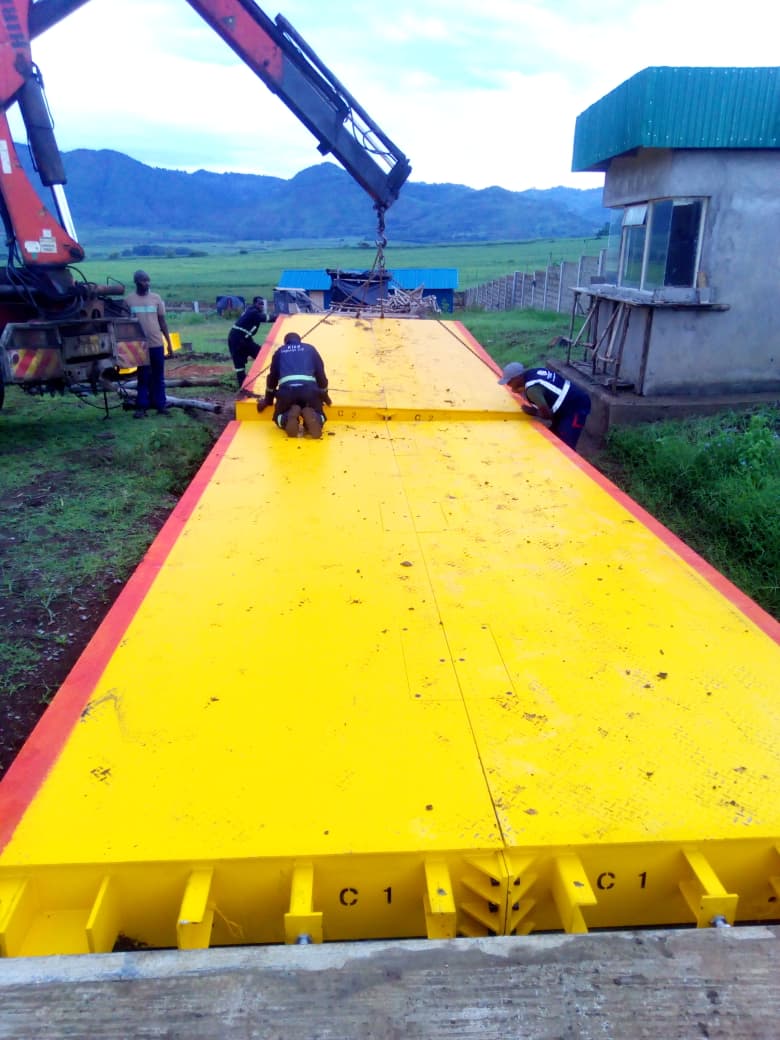
Today marks yet another important milestone for our coffee farmers as we continue expanding investment in the Nandi Coffee Cooperative Union Mill.

The installation of a weighbridge is not just an equipment upgrade. It is a critical component of the milling factory that will improve efficiency, transparency and accountability in coffee handling. It will also make the mill more accessible to large primary cooperatives that deliver significant volumes of cherry and parchment coffee.

Step by step, we are building a farmer-owned coffee value chain that supports production, processing, traceability, quality assurance and better market access for Nandi coffee farmers.

Read More
23 Apr
By: Remmy Butia 1

NANDI COUNTY TO HOST NYUKI MARATHON KENYA 2027, CHAMPIONING POLLINATOR PROTECTION AND APICULTURE

The County Government of Nandi will host the Nyuki Marathon Kenya 2027, a landmark event designed to elevate pollinator protection, sustainable livelihoods, and apiculture as a key rural enterprise.

Scheduled to take place in Nandi’s rich forest highlands, the marathon is more than a race – it is a global platform to champion environmental justice and sustainability through sports. The event will also serve as a prelude to the global Apimondia Conference, positioning Nandi on the world stage while catalysing investment in beekeeping, value addition, and conservation.

The announcement aligns with Nandi County’s 2026/2027 Annual Development Plan (ADP), which prioritises sustainable apiculture as a driver of grassroots development. The marathon, themed “One Bee, Million Futures,” will spotlight pollinator protection and rural income generation.

In preparation, the county is advancing the registration of the Nandi Beekeepers Cooperative Society, which will unite farmer groups, self-help groups, Community Forest Associations, and individual farmers committed to adding value to honey production.

“Our goal is clear: to establish Nandi as a leading global supplier of honey and bee products from the natural Tropical Green Forest Highlands,” said Dr Kiplimo Lagat, the County Executive Committee Member for Agriculture and Cooperative Development.

Nandi County’s apiculture strategy focuses on strengthening smallholder farmers through cooperative formations, expanding honey aggregation and processing capacity, providing modern beehives and training on bee management and harvesting, promoting bee-friendly farming practices to safeguard pollinator populations

“We are thrilled to be designated future host of the 2027 Nyuki Marathon,” Dr Kiplimo Lagat added. “This event is not just a race; it is a global movement that aligns with Nandi County’s efforts to protect our environment and support our local bee farmers.”

He emphasized that traceability is a priority in developing the apiculture industry. A Bill to this effect is currently in advanced stages at the County Assembly.

For the second consecutive year, Highlands Honey bee farmers are organising the Nandi County World Bee Day on 20 May 2026. Ms Charlene Ruto (bee farmer and industry ambassador) has been invited to grace the occasion, underscoring the county’s growing reputation as a centre for bee farming innovation.

With its extensive forest coverage and rich biodiversity of forests and wetlands, Nandi County is exploring the creation of Nyuki Forest Reserves to protect pollinator habitats. These initiatives reinforce the county’s commitment to biodiversity, climate-smart enterprises, and rural income generation.

By hosting the Nyuki Marathon 2027 as a prelude to the Apimondia 2027 Congress, Nandi County is not only elevating its apiculture sector but also showcasing itself as a vibrant, green-conscious region on the global stage.

Read More
08 Jul
By: Remmy Butia 11

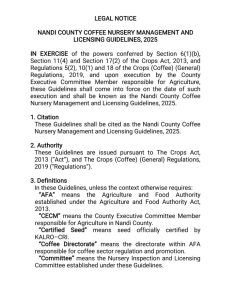
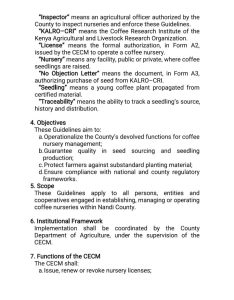
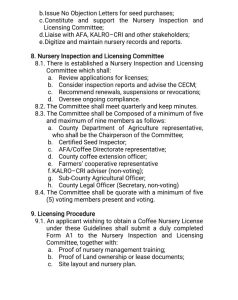
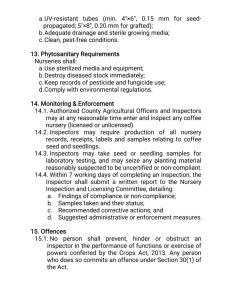
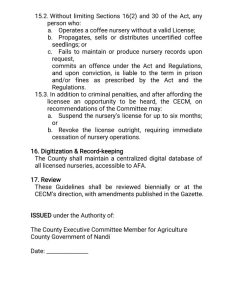
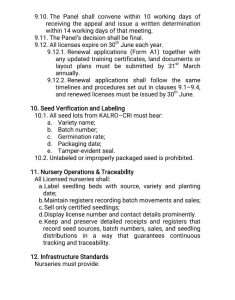
NANDI COUNTY COFFEE NURSERY MANAGEMENT AND LICENSING GUIDELINES, 2025

During our recent Ushirika Day celebrations, we reached an exciting milestone on our journey to elevate Nandi’s coffee to global standards. We officially launched the Nandi County Coffee Nursery Management and Licensing Guidelines, 2025 as part of our broader commitment under the Nandi Coffee Code of Practice.

What does this mean for you?


Whether your nursery is private, cooperative, or public, it now needs to be licensed, compliant, and accountable. These new guidelines are here to protect you, the farmer; by making sure that only certified seeds from KALRO–CRI are used, and that all seedlings are raised in clean, traceable, and verified conditions. No more guesswork. No more risks.


But this is bigger than just regulation. It’s about restoring trust, guaranteeing quality, and safeguarding our future.


This reform is a key step toward our dream of securing a Geographical Indication (GI) for Nandi Coffee which is a global recognition of what makes our beans so unique. From our rich volcanic soils to the cool escarpment altitudes and our heritage of livestock and organic farming, Nandi has what it takes to stand out on the world stage.


So let’s walk this journey together.


Let’s embrace the Nandi Coffee Code of Practice; a shared roadmap to regenerative, organic, and climate-smart farming. Because when we protect quality, we protect our farmers. And when the Nandi farmer thrives, Nandi shines.

Read More
15 May
By: Remmy Butia 0

GOVERNOR SANG’S TRANSFORMATIVE PROMISE FULFILLED AS NANDI COUNTY DAIRY SECTOR TAKES A LEAP FORWARD 

Kabiyet – In a landmark event that marks a new dawn for the dairy sector in Nandi County, the Technical Commissioning of the Ultra-High Temperature (UHT) Milk Production line at the Kabiyet Milk Processing Plant was successfully conducted earlier today. This milestone is a testament to H.E Governor Stephen Sang’s unwavering commitment to transforming the agricultural economy of Nandi, as pledged under his TransformativeAgenda.


The UHT milk production line is set to revolutionize dairy farming in the region by extending the shelf life of milk, reducing post-harvest losses, and opening up new markets for local farmers. This development aligns perfectly with the governor’s vision of value addition, job creation, and economic empowerment for the great people of Nandi.

Present during the commissioning was the Area MCA, Leader Of Majority Hon. Walter Teno, who lauded the project as a game-changer for local dairy farmers. Also in attendance were the Nandi County Technical Team and Directors of the Nandi Dairy Cooperative Union (NDCU), who expressed optimism about the plant’s potential to boost incomes and strengthen the dairy value chain.


A Promise Delivered


Governor Sang has consistently emphasized the need to modernize agriculture and leverage technology to uplift farmers. Today’s achievement is a clear confirmation of his pledge to industrialize Nandi County and ensure that farmers reap maximum benefits from their produce.


With the UHT line now operational, Nandi is poised to become a leading milk producer in the region, supplying high-quality, long-life milk to both local and international markets. This move is expected to attract investors, create jobs, and enhance food security, further solidifying Nandi’s reputation as the “Dairy Hub of Kenya.”

Winchit – The Transformation Continues


As the county celebrates this milestone, residents have reaffirmed their support for Governor Sang’s leadership, confident that his transformative agenda will continue to deliver tangible results. The journey towards a prosperous, self-reliant Nandi is well underway, and today’s commissioning is proof that #Winchit is more than just a slogan – it’s a reality in motion.


Long Live Nandi County!

Long Live Governor Stephen Sang’s Vision!


#TransformativeAgenda #Winchit #DairyRevolution #GovernorSangDelivers

Read More
29 Mar
By: Faith Songok 0

Newly Appointed Chief Officers for Agriculture and Cooperative Development Department Officially Assume Responsibilities

To ensure the Department of Agriculture and Cooperative Development’s operations continue smoothly under Governor Stephen Sang’s renewed mandate, Dr. Kiplimo Araap Lagat, the CEC Member for Agriculture and Cooperative Development, has today presided over the taking over ceremony of newly appointed Agriculture and Cooperative Development Chief Officers, Dr. Paul Sanga and Ms. Caroline Lagat.

The handover ceremony was held at the Department of Agriculture and Cooperative Development and was attended by administrative officials from the County Secretary’s office, Chairman agriculture committee county assembly Hon. Julius Kipkosgei, as well as directors and staff from the Agriculture department.

Hand over of Responsibilities and Duties to the new Chief Officers.

Speaking during the handover/taking over ceremony, CECM Dr. Kiplimo Arap Lagat extensively highlighted on the importance of commitment, transparency and accountability in the management and implementation of open governance and ensuring efficiency of service delivery for the promotion and development of the agricultural sector in Nandi.

“As a department, we are committed to ensuring that our agricultural sector is well managed, and that all priorities are obliged. Our biggest mandate as a department is to implement policies and regulations. Our responsibility is to create effective sequence of strategies and proposed actions for the synchronization of the primary function of the department which is to promote and support the growth and development of the agricultural sector in Nandi, and it is our responsibility to implement them.”

Dr. Sanga expressed his gratitude for the opportunity to serve the people of Nandi County in his new role and pledged to work closely with all staff and stakeholders to ensure the success of the agriculture and cooperative development activities in the county.

Ag. Chief Officer, Dr. Samson Bitok hands over responsibilities and duties to Chief Officer Agriculture, Dr. Paul Sanga.

On her part, Chief Officer Cooperative Development, Ms Caroline Lagat reiterated the zeal to implement the department’s mission of open governance and efficient service delivery to the public engaged to agriculture and cooperative development.

Ag. Chief Officer, Dr. Samson Bitok hands over responsibilities and duties to Chief Officer Cooperative Development, Ms. Caroline Lagat.

The newly appointed officials are now expected to work closely with the public and all stakeholders to achieve the county’s goals and objectives towards a vibrant agricultural sector. #ContinuedTransformation

Read More
28 Feb
By: Peter Koima 0

NANDI COUNTY INKS PARTNERSHIP WITH TEA FACTORIES TO MAINTAIN ROADS IN TEA GROWING AREAS

The County Government of Nandi has today entered into a Memorandum of Understanding (MOU) with tea processing factories to jointly oversee and manage the collection of cess and maintenance of roads in tea-growing regions within the county.
According to the county Governor H.E Stephen Sang, the collaboration is aimed at ensuring that all feeder roads in the tea-growing areas are well-maintained and easily accessible throughout the year. The county plans to work with tea industry stakeholders to minimize post-harvest losses and enable farmers to transport their produce to different factories while ensuring high-quality green leaf.
The MOU has been signed by numerous factories, including KTDA Chebut Factory, KTDA Kaptumo Factory, Kaimosi Tea Estate, Emrok Tea Factory, Sangalo Tea Factory, Mbogo Tea Factory, Nandi Tea Factory, Kamarich Tea Factory, Chepkumia Tea Factory, and EPK Factories (Chemomi, Savani, Kibwari, Kipchamo, Siret, Kapsumbeiwo & Kipkoimet Tea Factories), Tinderet Factory, Kipchabo Factory, Kapchorua Factory, Kilibwoni Factory, and Dl Koisagat Factory, in addition to all extra-county factories.
The Governor expressed his appreciation to the factories and all stakeholders involved for their commitment and dedication in partnering with the county government to improve the roads, which will ultimately benefit the tea farmers. #ContinuedTranaformation
Read More
22 Feb
By: Peter Koima 2

STREAMLINING DISTRIBUTION AND ISSUANCE OF SUBSIDIZED FERTILIZER ACROSS THE COUNTY

The County Government of Nandi, led by Governor Stephen Sang, is implementing measures to improve the distribution of subsidized fertilizer to benefit maize farmers in the county.
Under the guidance of the CECM Dr. Kiplimo Araap Lagat, the department of Agriculture & Cooperative Development has responded quickly to the request of Aldai’s maize farmers and the Governor’s appeal to the NCPB’s Regional Manager, Mr. Gilbert Rotich, to bring subsidized fertilizer closer to farmers in Nandi county.
As the first consignment for Aldai Farmers is received this evening, the CECM Dr. Lagat has announced that over 3,000 50kg bags of fertilizer will be available to Aldai farmers from tomorrow at a store located in Kobujoi, which was handed over to the NCPB last Friday.
Earlier in the day, members of the County Assembly committee on Agriculture chaired by Hon. Julius Kipkosgei accompanied the CECM to visit the Mosoriot National Cereals and Produce Board (NCPB) Depot in Chesumei Sub County to assess the progress of the subsidized fertilizer distribution.
They held a meeting with the depot manager, Mrs. Irene Tiren, to discuss ways to improve and fast track the fertilizer distribution at the depot and later engaged with farmers who were queued up to collect their fertilizer and shared plans to set up more collection points to improve the distribution channels and address other concerns for the benefit of farmers.
The department, in collaboration with the NCPB and the National Government, is exploring a cooperative distribution model to make fertilizers more accessible to farmers across the six sub-counties.
Read More
16 Feb
By: Peter Koima 0

NANDI COUNTY ADVANCES TO NAVCDP: Focusing on Commercialization and Value Chain Development for Smallholder Farmers

Nandi County is pleased to be among counties advancing to NARIGP’s phase TWO, known as NAVCDP, which shifts its focus from only Productivity and Profitability to commercialization and Value Chain development.
National Agricultural Value Chain Development Project (NAVCDP) builds on NARIGP/KCSAP efforts to enhance productivity and resilience for smallholder farmers transitioning to market-oriented commercialized farming.
The project aims to increase market participation and value addition for targeted farmers in select value chains, including those who are “in transition” or have “transitioned” from subsistence to commercialization.
During the Inaugural Implementation Support Mission, the CECM for Agriculture Dr. Kiplimo Araap Lagat led the County Government of Nandi Project Coordinating Unit CPCU, while representing the Agriculture CECM Caucus, in welcoming the new 5-year project. The County department of Agriculture is happy to announce that NAVCDP will scale up its reach to more farmers and wards in our county.
Read More
24 Jan
By: Peter Koima 3

Expanding Coffee Production in Nandi County

The County Government of Nandi through its Department of Agriculture and Cooperative Development is working to increase the coffee production in Nandi County and make it one of the leading, if not top, coffee-producing counties in Kenya. Some of the strategies earmarked by the Agriculture directorate include expanding production in suitable agroecological zones in the North and South Coffee Belts, which include specific regions with higher potential in the county.

Beginning this January, the department’s expansion efforts include mapping, registering, profiling and training farmers in preparation for increased production. It is also working closely with coffee researchers and farmers’ cooperatives to propagate over 2,000,000 coffee seedlings this year.


The Northern Coffee Belt includes Chepterwai, Kipkaren, Ndalat, Kabisaga, and Lelmokwo Ngechek wards, and the Southern Coffee Belt encompasses Ol’lessos, Kapchorwa, Tindiret, Songhor Soba, Kapsimotwo, Chemelil-Chemase, Koyo-Ndurio, Kobujoi Maraba, and Terik Wards.

In addition to coffee, the department is also supporting the development of high-yielding value chains such as dairy, avocado, and tea in the central belt. The central belt is made up of Kurgung Surungai, Kabiyet, Sang’alo Kebulonik, Chepkumia, Kapkangani, Kapsabet and Kilibwoni wards in Mosop and Emgwen Sub Counties.

It also includes Chemundu Kapng’etuny, Kosirai, Kaptel Kamoiywo, Kiptuya, Lessos, Nandi Hills and Kabwareng wards Chesumei,Nandi Hills & Aldai Sub Counties.

To further this goal, the CECM for Agriculture and Cooperative Development Dr. Kiplimo Araap Lagat made a visit to the Coffee Research Institute (CRI) to learn about new developments in the coffee industry and discuss potential collaborations with the management, led by Dr. Jane Cheserek. #ContinuedTransformation #DolaMashinani

Read More