Since assuming office in 2017, H.E. Governor Stephen Sang has overseen a remarkable transformation of healthcare in Nandi County. What began as a sector plagued by strikes, drug shortages, and crumbling infrastructure has evolved into one of Kenya’s most admired county health systems – a journey marked by strategic investment, technological innovation, and an unwavering commitment to bringing quality care closer to every resident.
When Governor Sang took office in 2017, the health sector was in disarray. County hospitals had gone without essential drugs for six months, and health workers were locked in prolonged industrial action. In his first week, the new administration moved decisively to end the strikes that had “decapitated the health sector,” negotiating a return-to-work formula with nurses who had been on strike for over three months .
The agreement addressed long-standing grievances over promotions and terms of service, allowing the new government to focus on what mattered most: delivering care. The department also moved quickly to dissolve hospital committees and the County Health Management Board constituted by the previous regime, paving the way for fresh leadership and better management of county hospitals .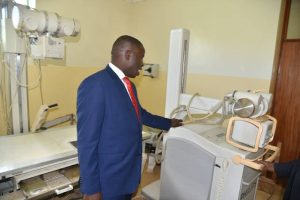
Central to Governor Sang’s healthcare philosophy is a simple but powerful idea: no resident should travel more than five kilometers to access medical care. This vision has driven a massive expansion of health infrastructure across the county.
Since 2017, the number of health facilities in Nandi has grown from 120 to 155, with several more under construction . New dispensaries in Jean Marie Seroney Kolelach, Cheptonon, Mombwo, Koitab Moset, and Kipsirwa will bring services to previously underserved areas, while major facilities have received significant upgrades .
At the heart of this infrastructure push is the Kapsabet County Referral Hospital, which has been transformed into a premier facility. The hospital now boasts an Intensive Care Unit (ICU) – the only such facility outside Moi Teaching and Referral Hospital in the region . A modern Mother and Baby Hospital, is now 90% complete and will further enhance maternal and child healthcare services.
Perhaps no area demonstrates the success of Governor Sang’s health agenda more clearly than maternal and child health. In 2017, only 36.9% of births in Nandi County took place in health facilities. Today, that figure has nearly doubled to 65%, positioning Nandi among Kenya’s top four safest counties for childbirth .

This achievement rests on deliberate investments in maternal health infrastructure. The county has constructed and renovated 16 maternity units and 28 laboratories, while operationalizing facilities like Kibisem Dispensary, Kiropket Maternity and Meteitei sub county maternity wing. The impact on families across Nandi is tangible: fewer mothers dying from preventable complications, more babies born safely, and reduced referrals to distant hospitals.
Child health outcomes have also improved dramatically. Immunization coverage has risen from 58.2% to 72.2%, while an impressive 73% of girls aged 10-14 years have received the HPV vaccine, protecting future generations from cervical cancer . The fight against malnutrition has yielded measurable results, with underweight children decreasing from 3.3% to 1.9% .
Governor Sang’s administration has embraced technology as a tool for transforming healthcare delivery. In February 2026, Nandi County achieved a landmark milestone: 100% digitization of healthcare services across all 155 facilities, supported by the deployment of 1,206 digital devices .
The digitization drive has streamlined operations, enabled real-time tracking of medical commodities, and improved patient experiences. Residents now benefit from reduced waiting times, better access to digital records, and more efficient resource allocation . The rollout of the Tiberbu Health Management Information System (HMIS) in 98.7% of facilities has further enhanced operational efficiency .
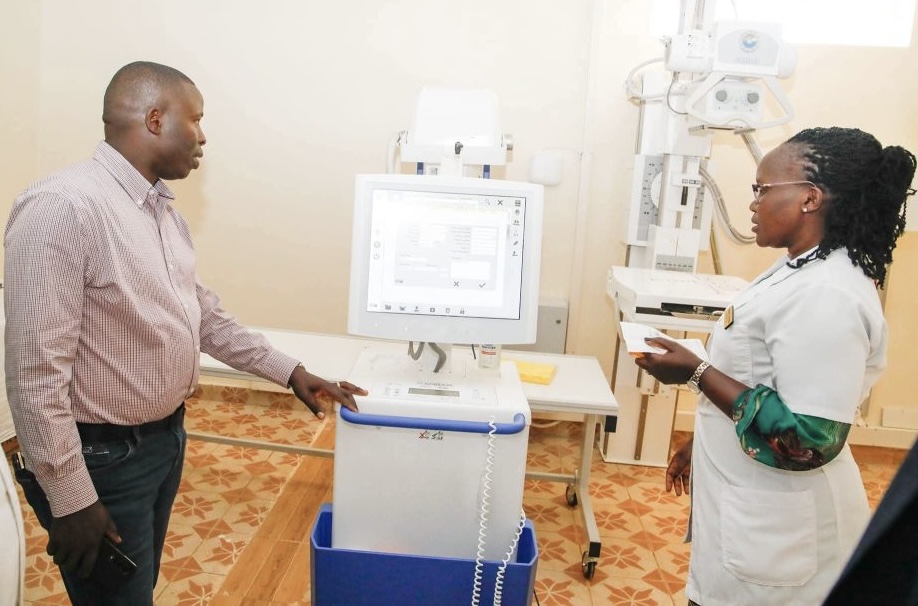
Diagnostic capabilities have also received a major boost. Advanced equipment has been installed in six facilities, while AI-powered X-ray machines deployed in Meteitei are revolutionizing disease detection. These investments have yielded concrete results: tuberculosis case identification has improved from 27% to 40%, enabling earlier treatment and better outcomes.
Recognizing that hospitals alone cannot meet all health needs, the county has invested heavily in community-based primary healthcare. Today, 1,520 Community Health Promoters are actively serving their communities, utilizing the electronic Community Health Information System (eCHIS) to connect residents with care .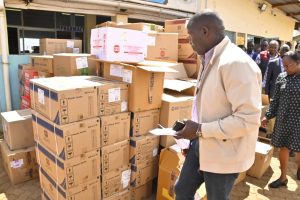
These frontline health workers have referred 8,730 chronic patients for care, ensuring that conditions like hypertension and diabetes are managed before they become emergencies . Their work represents a shift from curative to preventive care – a strategy that improves health outcomes while reducing the burden on hospitals.
Governor Sang has been a strong supporter of the national push for Universal Health Coverage through the Social Health Authority (SHA). As of 2025, 508,188 Nandi residents – 57% of the county’s population – are registered under SHA, placing Nandi 12th nationally in enrollment .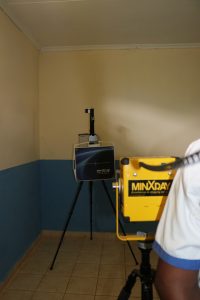
The county has gone beyond registration, actively supporting residents to access care. In a recent free eye clinic campaign in partnership with Pankaj Social Services Foundation, the county committed to covering SHA payments for one year for all cataract patients unable to afford contributions . The initiative has already restored sight to 75 patients through free cataract surgeries, demonstrating the administration’s commitment to leaving no one behind.
The transformation of Nandi’s health sector has not only improved outcomes but also strengthened the county’s financial position. Healthcare revenue has grown substantially, from Sh225 million in 2023/24 to Sh313 million in 2024/25, with projections reaching Sh450 million in 2025/26 .
This growth reflects improved management, reduced leakages, and the confidence residents have in their county health facilities. The prescription fill rate has climbed from 60% to 85% across county facilities, ensuring that patients receive the medicines they need when they need them .
When the United States government froze funding for HIV/AIDS programs in 2025, leaving thousands of patients uncertain about their future, Governor Sang’s administration responded swiftly. The county initiated a transition plan to fully take over HIV services, shifting from donor dependency to local ownership .
The transition, developed in partnership with the Henry Johnson Foundation Medical Research Institute, focuses on seamless continuity of care, integration of services into county health systems, and capacity building for healthcare workers . Governor Sang framed the move not simply as replacing a donor, but as “fundamentally redesigning HIV-Aids programmes for long-term sustainability” .
This proactive approach has strengthened the county’s HIV response. ART sites have increased from 38 to 58, serving 1,479 clients, and HIV prevalence has dropped from 2.8% to 2% .
With his second term drawing to a close, Governor Sang is accelerating the completion of legacy projects across the county. More than 30 projects are lined up for completion across Nandi’s 30 wards .
In healthcare, the focus remains on completing rural health projects to ensure residents can access services within their villages rather than traveling long distances to urban centers . The Mother and Baby Hospital, and ongoing expansions at sub-county hospitals like Kobujoi, Kapsengere and Chepterwai represent the final pieces of a comprehensive healthcare transformation.
The journey of Nandi County’s health sector since 2017 is a testament to what focused leadership can achieve. From a system in crisis, Governor Stephen Sang has built a health sector defined by accessible facilities, improved maternal and child outcomes, technological innovation, and financial sustainability.
The numbers tell part of the story: 155 facilities serving residents within five kilometers, 65% skilled deliveries, 100% digitization, and Sh450 million in projected annual revenue. But the real measure of success lies in the lives transformed – mothers who deliver safely, children who receive life-saving vaccines, and families who no longer travel hours for quality care.
As Governor Sang reflects on his tenure, he emphasizes that the work continues. “This is not just about building structures,” he has said. “It is about building a healthier future” . For the people of Nandi, that future is already here.

 29
29 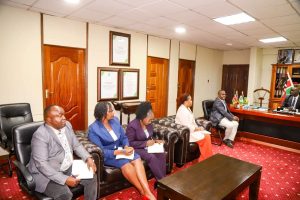 “Today, I received a courtesy call from representatives of the British High Commission to discuss opportunities for our youth to access quality higher education through internationally recognized scholarship programmes,” stated Governor Sang.
 “These programmes provide deserving students with opportunities to pursue postgraduate studies in the United Kingdom,” Governor Sang noted, adding that the community outreach would be key to ensuring no eligible candidate misses out due to a lack of information.
 30
30  29
29 
 According to fellow athlete Alex Kibet, who trains alongside him, Sawe is admired not only for his performance but also for his character. He describes him as a disciplined, humble, and quiet athlete whose commitment inspires everyone around him. “Sebastian is very focused and lets his training do the talking. He is disciplined, humble, and quiet, but his determination is unmatched. Every session with him pushes the rest of us to work harder,” says Alex.
 13
13 
 01
01 

 27
27 

 26
26  25
25 


 25
25 
 04
04