

FROM FARM TO CLASSROOM: HOW NANDI IS NOURISHING ITS CHILDREN AND EMPOWERING FARMERS
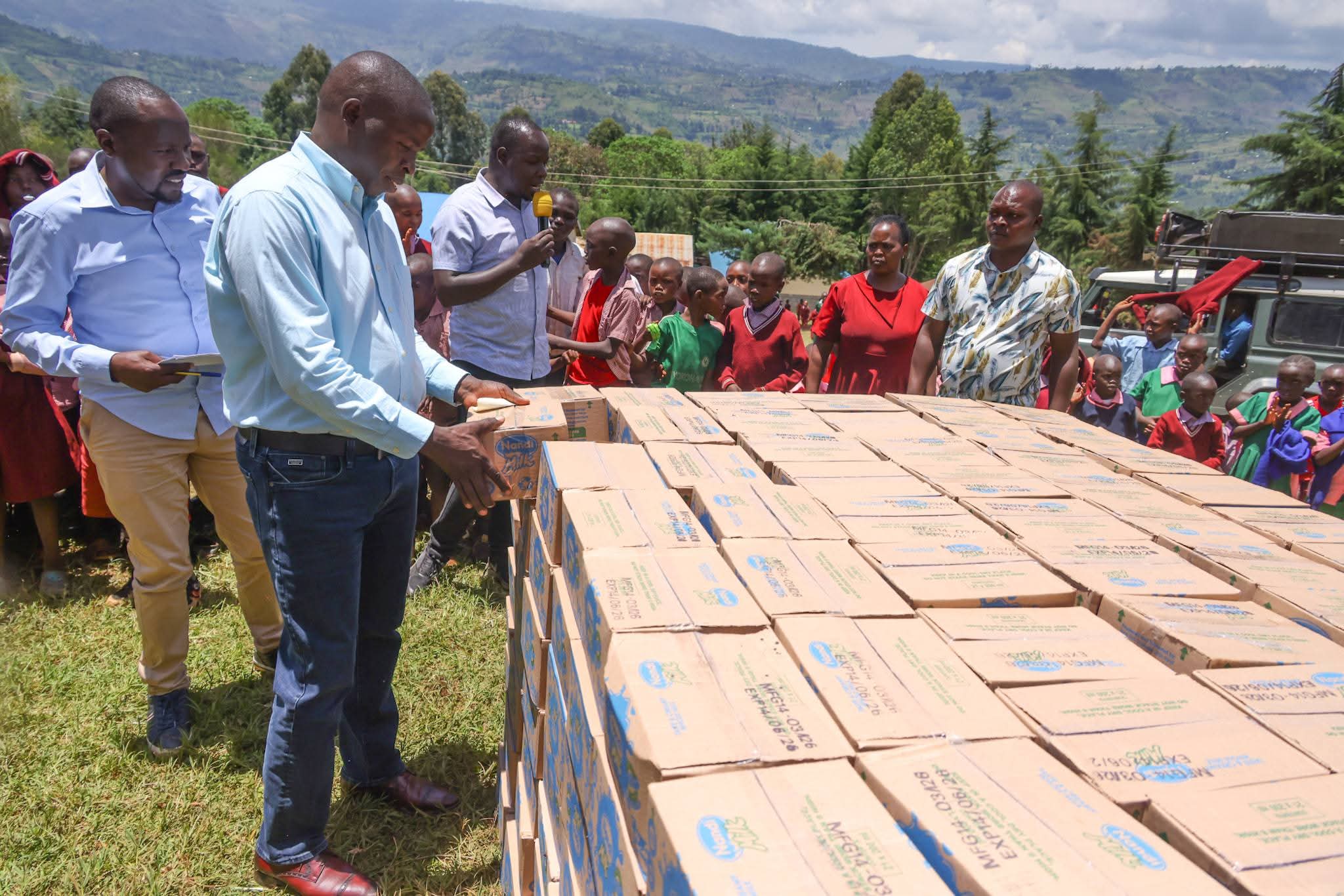
On a bright morning in Chepkemel, Tinderet Ward, the laughter of young children filled the air as they gathered for what would become a defining moment in Nandi County’s journey toward inclusive development. Beneath the excitement lay a powerful idea one that connects the health of a child to the livelihood of a farmer.
The launch of the ECDE School Feeding Programme at Chepkemel Comprehensive School is more than just a new initiative. It is a carefully designed model that brings together education, agriculture, and community empowerment into one transformative vision.
For years, access to quality early childhood education has remained a priority for the County Government of Nandi. But leaders understood that education alone is not enough.
A hungry child cannot concentrate, cannot learn effectively, and cannot fully benefit from the opportunities placed before them.
This reality informed a bold decision: to invest not only in classrooms and teachers, but also in the nutrition of the youngest learners.
Under the new programme, ECDE children will receive milk and fruits twice a week simple yet powerful additions that are expected to improve their health, boost school attendance, and enhance cognitive development during their most critical years.
Speaking during the launch, Governor Stephen Sang described the programme as a fulfillment of a key promise to the people of Nandi.
“We are building a future where every child has an equal opportunity to succeed. Proper nutrition is the foundation of that future,” he said.
But perhaps what makes this programme truly unique is its direct link to the county’s agricultural backbone.
The milk being served in classrooms is sourced locally from farmers organized under the Nandi Dairy Cooperative Union (NDCU). Through the Nandi Cooperative Creameries (NCC) processing plant, farmers now have a reliable and structured market for their produce.
This means that as children grow healthier, farmers grow more prosperous.
It is a deliberate cycle of impact one that ensures public investment benefits both the consumer and the producer.
Governor Sang emphasized this connection, noting that the programme is as much an economic strategy as it is a social intervention.
“This is not just about feeding our children. It is about strengthening our farmers, building our cooperatives, and creating sustainable livelihoods,” he said.
The Ward Development Fund has played a critical role in making this vision possible, enabling the county to channel resources directly to grassroots initiatives that address real community needs.
For Deputy Governor Dr. Yulita Cheruiyot, the programme represents an investment in human capital at its earliest stage.
“A well-nourished child is a confident learner. When we take care of our children today, we are securing the future of our county,” she noted.
Beyond the immediate benefits, the programme is expected to drive long-term change. Increased enrolment in ECDE centres, improved attendance, and better learning outcomes are just some of the anticipated results.
At the same time, farmers are being encouraged to join or form cooperatives to take advantage of milk aggregation, value addition, and access to markets through NCC. The county is also exploring opportunities to integrate other value chains such as coffee and tea, allowing more farmers to diversify into dairy farming.
Back in Chepkemel, as children enjoy their servings of milk, the broader impact of the programme begins to take shape. It is visible in the smiles of learners, the optimism of parents, and the renewed confidence of farmers who now see a stable future in their work.